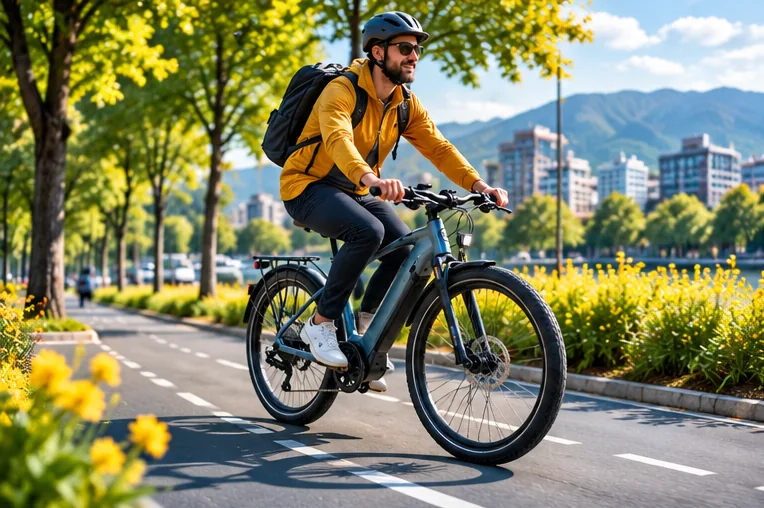
A repeatable non-laboratory range log using distance, battery energy, conditions and reserve, without pretending to have tested every bike.
Record a route that represents your actual use
Choose a route whose terrain and traffic resemble your commute or weekend riding. Log approximate rider and cargo load, wind, temperature, surface, assist setting and tire conditions. A one-off ride in perfect weather should not be treated as universal battery performance.
Before riding, follow normal checks for brakes, tires and route access. Riding is not a laboratory experiment: never deplete a battery merely to obtain an impressive figure or continue when conditions are unsafe.
Watt-hours per mile is a clearer comparison unit
If your equipment provides reliable energy used in watt-hours, divide that amount by miles traveled. For example, using 180 Wh over 10 miles gives 18 Wh/mile. Many stock displays do not show trustworthy energy consumption, so don't infer exact Wh from a coarse battery percentage icon.
Different assist modes and terrain can produce significantly different results. Repeat trips if you want a meaningful personal baseline; keep notes rather than trusting memory.
Use a planning reserve
Battery nominal capacity is not identical to all usable energy under every condition. Keep a reserve for detours, hills, wind and gradual capacity loss. Our range estimator shows scenario bands, not promises about a specific model.
If you have a measured watt-hour-per-mile figure, try the battery-use calculator and use the result only as one planning input.
Compare observations without overselling
A single commute can help compare two scenarios for your own use. It is not a controlled performance ranking unless conditions and methodology are sufficiently matched and documented.
When publishing first-hand observations, disclose distance, weather, rider mass range, terrain, assistance, tire pressure and measurement method. That's more useful than a bare claim that a bike 'goes 80 miles.'
Before you decide
- My route and conditions are recorded.
- I know whether my Wh reading is measured or estimated.
- I am comparing equivalent assistance and terrain.
- I have planned a reasonable battery reserve.